
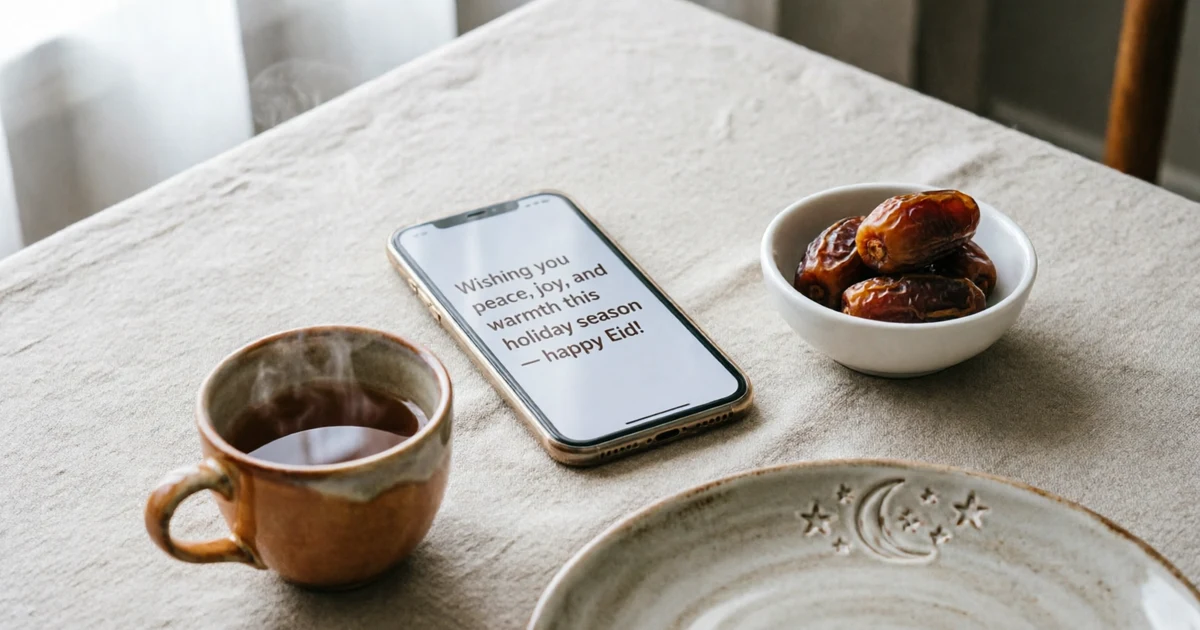
When the festive season arrives, millions of people look for the right words to wish their Muslim friends, colleagues, and family members a happy holiday. While the traditional greeting is beautiful, finding other ways to say eid mubarak with examples helps you personalize your message. Whether you want to send a quick text or write a professional email, varying your language shows extra thought and care.
In multicultural societies like the United States, Canada, the United Kingdom, and Australia, sharing holiday greetings is a wonderful way to build community. Using fresh phrases ensures your messages stand out as thoughtful, personalized, and genuinely warm.
Quick Answer
The phrase Eid Mubarak translates to blessed festival, and you can swap it for several natural alternatives. For a general audience, phrases like wishing you a joyful Eid or have a blessed Eid work perfectly. If you are looking for other ways to say eid mubarak with examples for professional or casual settings, choosing a phrase that mentions peace, prosperity, or community will suit the context best.
TL;DR
- Meaning: Wishing someone a blessed and happy celebration during the Islamic holidays of Eid al-Fitr or Eid al-Adha.
- Tone: Respectful, warm, and festive, ranging from casual to professional.
- Common Use: Shared at the end of Ramadan (the month of fasting) or during Eid al-Adha (the festival of sacrifice).
- Where It Appears: Text messages, email signatures, social media captions, greeting cards, and workplace chats.
- Formal or Informal: Works well in both settings, depending on the exact phrase you choose.
What the Holiday Greeting Means
Understanding what other ways to say eid mubarak with examples meaning implies helps you choose the right words. The core message is always about wishing someone peace, joy, and spiritual blessings. By offering a variation, you are simply expressing the same heartfelt sentiment using different linguistic styles.
For many, the end of fasting during Eid al-Fitr or the holy days of Eid al-Adha are deeply spiritual times. Acknowledging these moments with a thoughtful greeting shows that you appreciate the significance of the occasion. It is a way to celebrate alongside people, validating their traditions in a supportive, grounded way.
Basic Explanation of the Phrases
Eid is an Arabic word meaning festival, feast, or celebration, and Mubarak translates to blessed. When you look at other ways to say eid mubarak with examples meaning in text or email, you are substituting the traditional Arabic terms with English equivalents that convey the same warmth. This makes the greeting accessible to everyone, regardless of their cultural or religious background.
Using English-based alternatives does not diminish the greeting. Instead, it translates the underlying emotion of the holiday into words that fit naturally into your everyday vocabulary. This is especially useful for those who want to be respectful but feel self-conscious about pronouncing or using traditional Arabic terms incorrectly.
How People Use Greetings in Texting and Online Conversation
Digital communication allows people to connect instantly during holidays. When using other ways to say eid mubarak with examples in chat or on social media platforms like Instagram and TikTok, speed, warmth, and brevity matter.
In a casual online conversation, people often combine festive wishes with emojis or personal updates. On public social media comments, greetings tend to be short and cheerful, focusing on community, delicious food, and family happiness.
When texting, the length of your message often depends on your relationship with the recipient. A close friend might receive a long, warm paragraph filled with inside jokes, while a casual acquaintance might get a quick, friendly one-liner.
Tone and Emotional Meaning
The message tone shifts based on the specific words you select. Selecting the wrong phrasing can sometimes feel cold or, conversely, overly familiar.
Warm and Personal
Sentences focusing on family, delicious food, and shared laughter carry a soft, friendly tone. These are perfect for close friends, neighbors, and family members. They emphasize the social and communal aspects of the holiday.
Professional and Respectful
Phrases emphasizing peace, rest, and prosperity fit well in workplace communications. They acknowledge the holiday without prying into personal matters or making assumptions about how the recipient chooses to celebrate.
Spiritual and Deep
Mentioning blessings, light, and answered prayers offers a more traditional emotional meaning. These greetings are highly valued by those who appreciate a focus on faith and reflection.
Common Situations Where It Appears
You will typically need these alternative greetings in these common settings:
- Writing a handwritten festive card for a neighbor or friend.
- Sending a morning message in a WhatsApp or Apple iMessage group chat.
- Adding a pleasantry to the bottom of a professional business email before the holiday begins.
- Posting a celebratory picture caption on Instagram, Snapchat, or TikTok.
- Wishing a colleague well on Slack or Microsoft Teams before they take time off.
Examples in Real Conversations
Here are several practical ways to phrase these greetings in everyday life, organized by specific scenarios.
Situation 1: Texting a close friend on the morning of the holiday
- Example: Hope your day is filled with incredible food, lots of laughter, and quality time with your family. Happy Eid.
- Meaning: I hope you enjoy the festive celebrations and feast today.
Situation 2: Sending a professional email to a corporate client
- Example: Wishing you and your team a peaceful, restful, and prosperous Eid holiday.
- Meaning: I respect your holiday, appreciate our business relationship, and wish you success.
Situation 3: Replying to a group chat message from a peer
- Example: Sending warmest wishes to you and your household. May this holiday bring lots of joy to your home.
- Meaning: Sending positive thoughts to you and your family.
Situation 4: Writing a message to a colleague on Slack
- Example: I hope you have a wonderful and relaxing break for Eid. Enjoy the time off.
- Meaning: Have a great holiday away from work tasks.
Situation 5: Leaving a comment on an Instagram photo
- Example: What a beautiful family photo. Wishing you all a blessed and happy celebration.
- Meaning: Celebrating your happy moment on social media.
Similar Terms and Related Phrases
You can use different digital communication approaches depending on who you are messaging. Instead of the standard phrase, you might hear regional alternatives like Kul ‘am wa antum bi-khair, which means may you be well every year.
In Turkey, people often say Bayramınız Mübarek Olsun, which translates to may your holiday be blessed. In English-speaking countries, people often simplify these diverse cultural expressions into happy Eid or warmest wishes for the holiday. Knowing these variations helps you appreciate the diverse global tapestry of the holiday.
When You Should Use Alternative Phrases
Using alternative phrases is ideal when you want to avoid sounding repetitive or generic. If you are sending multiple messages to different people in the exact same friend group or office, varying your language keeps each message unique and genuine.
It is also helpful if you are a non-Muslim who wants to show respect using clear, simple English words. It demonstrates that you took an extra moment to think about what you wanted to say, rather than copy-pasting a standard greeting.
When You Should Avoid Them
Avoid using overly casual or slang terms if you are messaging a senior colleague, a client, or an elder. For instance, shortening the holiday to a hyper-casual text reply might seem dismissive to someone who views the festival with deep spiritual importance.
Additionally, do not use overly religious or spiritual phrases if you are not sure of the recipient’s personal level of practice. Keeping the language polite and focused on peace, joy, and family is always the safest and most respectful route.
Is It Formal or Informal?
The traditional phrase fits anywhere, but the alternatives can lean either way. Wishing someone a peaceful and prosperous holiday is perfectly formal and works well in corporate settings.
On the other hand, asking someone how their holiday feast is going, or wishing them a massive plate of biryani, is highly informal. Keep these casual texting styles reserved for close peers.
USA and Tier 1 Country Usage
In American texting and social media language, people highly value inclusivity, clarity, and genuine connection. Non-Muslims in the US, UK, Canada, and Australia frequently use variations like wishing you a happy Eid to connect with coworkers and friends.
This approach is widely appreciated because it bridges cultural gaps while maintaining a polite, friendly tone. It fits perfectly into the modern, diverse workplace and community spaces where celebrating cultural differences is the norm.
Quick Reference Table
| Context | Alternative Phrase | Tone | Best Use | Avoid If |
| Professional Email | Wishing you a peaceful and blessed Eid | Formal | Corporate clients and partners | Close childhood friends |
| Casual Texting | Hope you have an amazing day with family | Friendly | Peers, classmates, and close friends | Strict formal business |
| Social Media | Warmest wishes to everyone celebrating | Inclusive | Public captions and general updates | Personal private condolences |
| In-Person Greeting | Have a joyful and relaxing holiday | Warm | Neighbors, local shopkeepers, and acquaintances | Legal or highly formal letters |
| Workplace Chat | Enjoy your well-deserved holiday break | Respectful | Co-workers and team members | People who are not celebrating |
Deeper Dive: Eid al-Fitr vs. Eid al-Adha Greetings
Because there are two major Eid celebrations in the Islamic calendar, tailoring your greeting to the specific festival adds an extra layer of thoughtfulness.
Eid al-Fitr
This holiday marks the end of Ramadan, the month of fasting. Greetings that focus on reward, sweet treats, celebration, and relaxation are highly appropriate.
- Example: Wishing you a sweet and joyful celebration after a month of dedication.
Eid al-Adha
This holiday marks the completion of the annual Hajj pilgrimage and focuses on sacrifice, charity, and sharing. Greetings that focus on peace, community spirit, and sharing meals are ideal here.
- Example: May the spirit of unity, sharing, and peace bless your home this holiday.
How to Respond to an Eid Greeting
If someone sends you a holiday wish first, knowing how to reply is just as helpful as knowing how to send one.
If you are celebrating, a simple thank you, wishing you the same is classic. You can also reply with Khair Mubarak, which means blessings to you as well.
If you do not celebrate the holiday but want to accept the well wishes gracefully, you can reply with thank you, I hope you have a wonderful holiday too or thank you, wishing you and your family a peaceful day. This keeps the exchange warm and reciprocal.
Conclusion
Finding other ways to say eid mubarak with examples allows you to tailor your holiday wishes to any situation. Whether you choose a formal phrase for a professional email or a casual line for a quick text message, the goal remains the exact same. Expressing genuine goodwill, peace, and happiness ensures your greeting is always well-received, helping you build stronger, more meaningful connections with those around you.
FAQs
What does other ways to say eid mubarak with examples mean in texting?
In texting, it means using natural English phrases like have a blessed holiday or wishing you joy today instead of just repeating the standard Arabic greeting. It keeps your digital communication feeling human and personalized.
Can I use these alternative greetings in a professional message?
Yes, phrases like wishing you a peaceful Eid or hope you have a restful holiday break are completely appropriate for professional emails and workplace chats on Slack or Teams.
Is it rude to say happy Eid instead of the traditional greeting?
No, it is not rude at all. It is a polite, widely accepted, and cheerful way to acknowledge the holiday, especially when shared among friends and colleagues of different backgrounds.
What is a good variation to use in casual texting?
You can say something like hope you have a great day filled with love and good food to keep things light, warm, and friendly.
How do people in the US usually share this greeting on social media?
People on social media often post text examples like wishing peace and happiness to all my friends celebrating today, which works well for a broad public audience.
Do I need to use different greetings for the two different Eids?
While you do not have to, tailoring your message to focus on food and sweet celebrations for Eid al-Fitr, or sharing and community for Eid al-Adha, shows a deeper level of understanding.