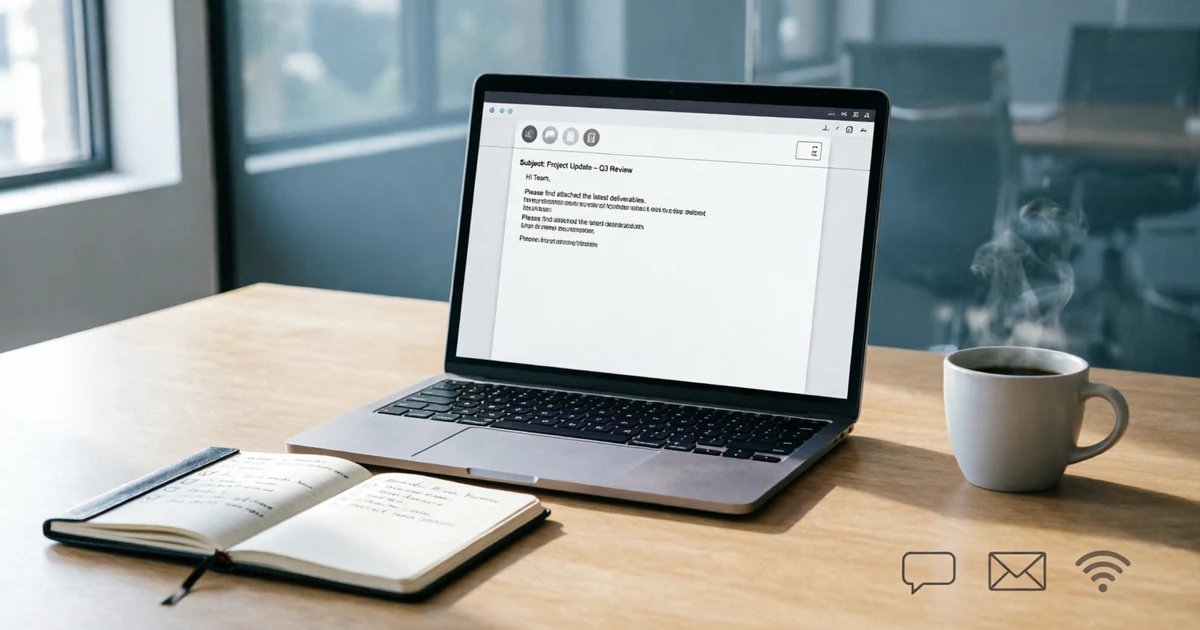
If you regularly write emails, business messages, or professional correspondence, you have likely used the phrase “please advise” when requesting guidance or feedback.
While it is widely accepted in workplace communication, many people search for other ways to say “please advise” because it can sound too formal, direct, or repetitive when used frequently. Choosing alternative expressions can help your messages feel more polite, approachable, and engaging.
The wording you use often influences how your message is received. Whether you are communicating with a colleague, manager, client, or customer, selecting the right phrase can create a more collaborative and professional tone.
Fortunately, there are many effective alternatives that fit different situations. In this guide, you’ll discover professional, friendly, and courteous ways to replace “please advise” and improve your business communication skills.
Quick Answer
Other ways to say please advise include:
- Please let me know
- I would appreciate your guidance
- Could you provide your input?
- Please share your thoughts
- What would you recommend?
- Kindly let me know
- Could you advise on this matter?
- I’d appreciate your feedback
These alternatives often sound more conversational and can fit different professional situations better than the standard phrase.
TL;DR
- Meaning: A request for information, guidance, or a decision.
- Tone: Usually professional and formal.
- Common use: Business emails and workplace communication.
- Where it appears: Emails, reports, customer support, and project discussions.
- Formality: Generally formal, but alternatives can be formal or casual.
- Best practice: Choose wording based on your audience and situation.
What Please Advise Means
Please advise is a professional phrase used when asking someone for guidance, clarification, instructions, feedback, or a decision.
In simple words, it means:
- Tell me what I should do
- Let me know your recommendation
- Share your guidance on this matter
For example:
Please advise on the next steps for this project.
The writer is asking the recipient to provide direction regarding what should happen next.
Why People Look for Alternatives
Although widely used in business communication, some people find the phrase:
- Too formal
- Slightly cold
- Overused
- Abrupt when used alone
For example:
Please advise.
This can sound demanding depending on the context.
A more natural version might be:
Please let me know your thoughts when you have a chance.
The second example feels more collaborative and friendly.
Best Alternatives to Please Advise
The following options work well in professional emails and messages.
| Alternative | Best For | Tone |
|---|---|---|
| Please let me know | General communication | Friendly |
| I would appreciate your guidance | Seeking expertise | Respectful |
| Could you provide your input? | Team discussions | Collaborative |
| What would you recommend? | Asking for advice | Professional |
| Please share your thoughts | Feedback requests | Friendly |
| I’d appreciate your feedback | Reviews and opinions | Professional |
| Kindly let me know | Formal communication | Polite |
| Could you advise on this matter? | Formal requests | Professional |
| Please provide direction | Leadership communication | Formal |
| What are your thoughts? | Informal workplace discussions | Casual-professional |
How People Use These Alternatives in Emails
Most professionals use substitute phrases when they want their message to sound more natural.
Example 1
Situation
Project update
Example
We’ve completed the initial phase of development. Please let me know your thoughts on moving forward.
Meaning
Requesting feedback about the next step.
Example 2
Situation
Seeking approval
Example
Could you provide your input before we finalize the proposal?
Meaning
Requesting feedback before making a decision.
Example 3
Situation
Client communication
Example
I would appreciate your guidance regarding the preferred implementation timeline.
Meaning
Asking for expert advice.
Formal Alternatives
If you need a professional tone, consider these options:
- I would appreciate your guidance.
- Could you advise on this matter?
- Kindly provide your recommendations.
- Please provide direction.
- Your feedback would be appreciated.
- I would value your opinion.
These work well for:
- Executive communication
- Client emails
- Legal correspondence
- Formal business discussions
Informal and Friendly Alternatives
For colleagues and internal communication, softer phrases often work better.
Examples include:
- What do you think?
- Let me know your thoughts.
- Can you help me with this?
- I’d love your feedback.
- What would you suggest?
- Let me know what works best.
These expressions create a more conversational tone.
Tone and Emotional Meaning
The phrase please advise generally sounds:
- Professional
- Neutral
- Direct
- Task-focused
However, tone changes depending on context.
Can It Sound Rude?
Sometimes yes.
For example:
Please advise.
Sent by itself with no context can feel abrupt.
A more polite version would be:
Could you please advise on the best course of action?
Or:
I’d appreciate your guidance on this matter.
Adding context and appreciation usually improves the tone.
Common Situations Where It Appears
You may see this phrase or its alternatives in:
- Business emails
- Customer service requests
- Workplace chats
- Project management discussions
- Vendor communications
- Technical support messages
- Client correspondence
- Approval requests
- Team collaboration
Examples in Real Conversations
Situation
Manager approval needed
Example
We’ve updated the budget proposal. Could you provide your input before Friday?
Meaning
Requesting feedback before submission.
Situation
Customer service inquiry
Example
Please let me know the status of my request.
Meaning
Asking for an update.
Situation
Technical issue
Example
What would you recommend as the next troubleshooting step?
Meaning
Seeking expert guidance.
Situation
Team collaboration
Example
Please share your thoughts on the proposed schedule.
Meaning
Requesting feedback from colleagues.
Situation
Client project
Example
I’d appreciate your feedback regarding the revised design.
Meaning
Seeking professional input.
Similar Terms and Related Phrases
Several expressions carry a similar meaning but create different impressions.
| Phrase | Difference |
|---|---|
| Please advise | Direct request for guidance |
| Please let me know | Broader and friendlier |
| What do you recommend? | Specifically asks for advice |
| Please share your thoughts | Focuses on opinions |
| Could you provide feedback? | Focuses on evaluation |
| Kindly let me know | More formal and polite |
| What are your thoughts? | More conversational |
When You Should Use It
The phrase works best when:
- You genuinely need guidance
- A decision must be made
- You need clarification
- You are communicating professionally
- You want a concise request
It remains common in many industries, especially corporate environments.
When You Should Avoid It
Consider alternatives when:
- Writing casual workplace messages
- Communicating with close colleagues
- Sending customer-friendly emails
- Trying to build rapport
- The phrase sounds repetitive
Overusing it can make communication feel stiff.
Is It Formal or Informal?
Please advise is generally considered formal.
Appropriate For
- Business emails
- Professional correspondence
- Client communication
- Corporate environments
Less Appropriate For
- Casual texting
- Social media comments
- Friendly conversations
- Informal workplace chat
In many modern workplaces, people prefer more conversational alternatives.
Common Misunderstandings
Some readers interpret the phrase differently.
Possible interpretations include:
- Asking for advice
- Requesting approval
- Seeking clarification
- Wanting instructions
Because the phrase is broad, adding context helps avoid confusion.
Instead of:
Please advise.
Try:
Please advise whether we should proceed with the launch.
The second version clearly explains what response is needed.
USA and Tier 1 Country Usage
In the United States, Canada, the United Kingdom, Australia, and other English-speaking countries, please advise remains common in professional communication.
However, modern business writing increasingly favors friendlier language.
Many professionals now choose:
- Please let me know
- What are your thoughts?
- I’d appreciate your feedback
- Could you provide your input?
These alternatives often sound more approachable while remaining professional.
Quick Reference Table
| Context | What It Means | Tone | Best Use | Avoid If |
|---|---|---|---|---|
| Client email | Request guidance | Professional | Business communication | Casual conversations |
| Team discussion | Ask for input | Collaborative | Workplace projects | Social chats |
| Manager request | Seek direction | Respectful | Approval requests | Informal texting |
| Customer support | Request information | Polite | Service inquiries | Friendly banter |
| Executive communication | Ask for recommendations | Formal | Leadership discussions | Casual workplace messaging |
Conclusion
When looking for other ways to say please advise, the best choice depends on your audience and situation. While the phrase remains acceptable in professional communication, many modern alternatives sound warmer and more natural.
Options such as please let me know, could you provide your input, I’d appreciate your feedback, and what would you recommend often create a friendlier tone without sacrificing professionalism. Choosing the right wording helps your message feel clear, respectful, and effective.
FAQs
What does please advise mean?
It means you are asking someone for guidance, instructions, feedback, clarification, or a recommendation.
Is please advise rude?
Not usually. However, if used without context, it can sound abrupt or demanding.
What is a more polite way to say please advise?
You can say please let me know, I’d appreciate your guidance, or could you provide your input.
Can I use please advise in a professional email?
Yes. It is commonly used in business communication, although many professionals now prefer friendlier alternatives.
What is the difference between please advise and please let me know?
Please advise specifically asks for guidance or recommendations. Please let me know is broader and can request any type of information.
Is please advise formal or informal?
It is generally considered formal and is most common in workplace communication.
What is the best alternative to please advise?
Please let me know is often the safest and most natural alternative because it works in most professional situations