When you write an essay, a professional email, or a casual message, you often need to show two sides of an argument. The phrase on the other hand is the most common tool for this job. However, using the same expression repeatedly makes your writing sound repetitive and flat. Finding other ways to say on the other hand helps you match your specific tone, whether you want to sound highly professional, casual, or direct.
Choosing the right alternative depends heavily on your audience and the medium you use. A phrase that works perfectly in a workplace chat might sound out of place in a university research paper. Knowing these subtle differences helps you communicate your ideas more effectively.
Quick Answer
The best alternatives depend on your context. In formal writing, use terms like conversely, contrastingly, or alternatively to introduce an opposing point smoothly. For everyday speech and professional emails, simpler options like however, then again, or that said work best to transition between contrasting ideas.
TL;DR
- Meaning: Introducing a contrasting point, alternative option, or opposing view.
- Tone: Can range from highly formal to relaxed and casual.
- Common Use: Transitioning between two different facts, arguments, or choices.
- Where It Appears: Essays, workplace emails, text messages, and spoken conversations.
- Formality Level: The original phrase is neutral, but its alternatives can cater to strict professional standards or casual chat.
What the Phrase Means
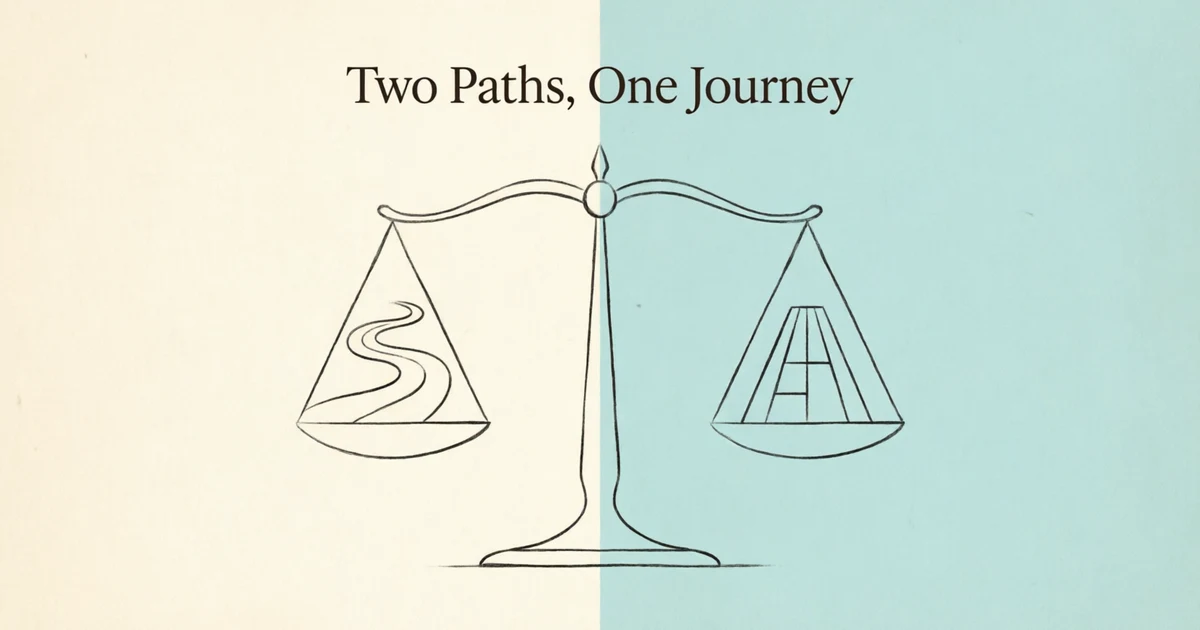
The expression serves as a transitional bridge. It signals to the reader or listener that you are about to present a point that contrasts with, contradicts, or offers an alternative to the statement you just made. Think of it as a visual scale where you weigh two competing ideas against each other to give a complete view of a situation.
How People Use It in Texting and Online Conversation
In digital spaces like text messages, Slack, Teams, or social media comments, people rarely want to type out longer transitional phrases. Speed and brevity matter most in an online conversation. When you want to show a counterpoint in casual texting, you need options that feel snappy and conversational.
In a casual message or dating texts, long transitions can make you sound overly stuffy or academic. Instead, people swap the phrase for shorter terms that maintain a friendly, flowing dialogue. On platforms like Instagram or TikTok, where space in captions or comments is limited, picking a concise alternative keeps your writing engaging.
Tone and Emotional Meaning
Transitions carry emotional weight and set the mood of your communication. The phrase you choose can alter how your message is received.
- Polite and Professional: Options like that being said or from another perspective show that you respect the previous point but want to add nuance.
- Direct and Serious: Words like conversely or alternatively get straight to the business of comparing facts without extra fluff.
- Casual and Soft: Phrasing such as then again or mind you keeps the conversation relaxed and open-ended.
- Dismissive or Sarcastic: Depending on your delivery, terms like that is all well and good, but can signal that you think the first point is irrelevant.
Common Situations Where It Appears
- Academic Essays: Comparing two research studies or philosophical viewpoints.
- Business Reports: Weighing the financial risks against the potential rewards of a new project.
- Workplace Emails: Discussing scheduling conflicts or project directions with teammates.
- Daily Decisions: Talking to a friend about where to eat or which movie to watch.
- Online Debates: Offering a counter-argument in a social media comment section.
Examples in Real Conversations
Situation 1: A workplace discussion about remote work
- Example: Working from home saves everyone a lot of commuting time. That said, some team members feel quite isolated without regular office interaction.
- Meaning: The speaker acknowledges the benefit of saving time but introduces the negative emotional impact as a counter-point.
Situation 2: Choosing a vacation spot in a casual chat
- Example: This resort has incredible reviews and a beautiful beach. Then again, it is twice our original budget.
- Meaning: The second sentence presents a financial drawback that contrasts with the positive features mentioned first.
Situation 3: A formal analysis of market trends
- Example: The domestic tech market experienced flat growth over the last quarter. Conversely, international software sales reached an all-time high.
- Meaning: The writer uses a formal word to show a direct, opposite trend in two different sectors.
Situation 4: Texting a friend about a weekend plan
- Example: We could go to the concert on Saturday. Alternatively, we could just stay in and order food.
- Meaning: This shows how to present a completely different option for the weekend without using long transitions.
Similar Terms and Variations
Understanding the subtle differences between similar terms prevents you from using them incorrectly.
Alternatively vs. Conversely
Alternatively implies you are offering a choice between two paths. For instance, you can take the train, or alternatively, you can drive. Conversely implies a direct logical flip or opposite reaction. For example, when prices rise, demand drops; conversely, when prices fall, demand rises.
That Said vs. Mind You
That said acknowledges the validity of the first statement before introducing a complication. Mind you is more directional, often used to add a sudden afterthought or a warning to clarify your previous statement so people do not misunderstand you.
When You Should Use These Alternatives
You should look for other options whenever you notice you have used the original phrase more than once in the same document or conversation. Monotony kills reader engagement.
Another great time to switch is when you need to match a specific level of strict formality. If you are writing a legal brief or a medical paper, switching to terms like contrastingly or text examples that feature clear logic makes your analysis sound much more authoritative.
When You Should Avoid Them
Avoid complex alternatives when you are engaged in rapid casual texting or sending a quick message to a close friend. Using words like conversely or text variations like on the contrary in a basic SMS can make you sound detached, robotic, or overly argumentative.
Do not use these words if your second point does not actually contrast with the first. If your second sentence simply adds more supporting information, you should use terms like addition, furthermore, or besides instead.
Is It Formal or Informal?
The original phrase sits perfectly in the middle of the spectrum, making it safe for almost any situation. However, its substitutes usually lean heavily one way or the other.
| Word or Phrase | Formality Level | Primary Setting |
| Conversely | Highly Formal | Academic journals, legal documents |
| Alternatively | Formal / Neutral | Business proposals, options analysis |
| That said | Neutral / Informal | Workplace emails, casual conversations |
| Then again | Informal | Chat messages, spoken English |
| Mind you | Informal | Casual storytelling, friendly texts |
Common Misunderstandings
A frequent mistake is using on the contrary when you actually mean on the other hand. These two phrases are not interchangeable.
On the other hand balances two true but contrasting facts. On the contrary is used to deny the truth of the first statement and introduce the actual truth. For example, if someone says you look tired, and you reply that you feel great, you would say, on the contrary, I feel completely energized. Using the wrong one can confuse your reader about whether you agree or disagree with the initial premise.
USA and Tier 1 Country Usage
In American texting and business culture, efficiency is highly valued. Professionals in the USA, Canada, and the UK frequently use that said or having said that in workplace communication because it acknowledges the previous point quickly before moving forward.
In Australian and British casual speech, you will often hear then again or mind you used to soften a counter-argument during an online conversation. These choices keep the dialogue cooperative rather than confrontational.
Quick Reference Table
| Context | What It Means | Tone | Best Use | Avoid If |
| Academic Writing | Introduce a direct opposite fact | Formal | Research papers, essays | Casual text messages |
| Business Emails | Acknowledge a point but add a caveat | Professional | Balancing pros and cons | Strict legal contracts |
| Project Planning | Offer an entirely different path | Neutral | Presenting project options | Giving a direct command |
| Casual Texting | Introduce a casual afterthought | Informal | Chatting with friends | Formal performance reviews |
Categorized List of Substitutes
To make it easy to find the exact wording you need, here is a collection of options categorized by their primary use cases.
Formal and Academic Options
- In contrast: Useful when you are directly comparing two distinct data sets or specific theories.
- By contrast: Works well at the beginning of a sentence to highlight a stark difference.
- Yet: A short, powerful word to connect two opposing clauses within a single sentence.
- Whereas: Ideal for joining two contrasting ideas together without splitting them into two sentences.
- Nonetheless: Signals that the second point remains true despite the weight of the first point.
Professional and Workplace Options
- That being said: Perfect for emails when you want to show you have considered a teammate’s input before adding your own.
- All the same: Demonstrates that while the first point matters, the second point carries equal weight.
- Up against that: Shows a practical obstacle or a competing factor in business planning.
- In spite of that: Focuses on moving forward even when a specific challenge exists.
- From another angle: Helpful during brainstorming sessions to pivot the team’s focus.
Casual and Texting Options
- But: The simplest, most direct way to change direction in a conversation.
- Though: Can be placed at the end of a sentence to add a relaxed, contrasting thought.
- Still: Shows that a specific fact remains true even after considering the previous comment.
- Anyway: Helps pivot the chat back to an alternative point or a fresh perspective.
Conclusion
Mastering other ways to say on the other hand allows you to control the flow and mood of your writing. Instead of relying on a single repetitive phrase, you can select terms that perfectly fit your specific situation. Whether you need the academic precision of conversely for a university paper or the relaxed warmth of then again for a friendly text message, choosing the right transition keeps your writing sharp, natural, and engaging.
FAQs
What does on the other hand mean in text?
In digital communication, the phrase meaning in text remains the same as in spoken English. It signals that you are introducing a contrasting thought, an alternative option, or a second side to a story. People use it to balance their statements so they do not sound too one-sided.
Is on the other hand formal or informal?
The phrase itself is neutral. It is perfectly acceptable in formal essays and professional emails, but it is also used regularly in casual conversation. Because it is so versatile, it does not sound out of place in most settings.
Can I use on the other hand in a professional message?
Yes, you can use it in a professional message without any issues. However, if your message is very brief, swapping it for terms like that said or however can make your writing feel a bit more modern and concise.
What is the shortest way to say on the other hand?
The shortest alternatives are simple conjunctions like but or yet. In casual texting and online conversation, these short words are often preferred because they save space and keep the sentence moving quickly.
Is it incorrect to say on the one hand first?
It is not strictly incorrect to use on the other hand by itself. While pairing it with on the one hand creates a perfectly balanced structure, most modern writers skip the first part entirely to keep their sentences cleaner and more direct